a winter stockpot obsession
collecting scraps for stock. it's something i've always done, but lately the need for stocks and broths feels unwavering as the winter days progress...

It you buy store bought broth and stock, I highly encourage you to stop immediately and just make your own. I believe it’s the simplest, most budget friendly, not to mention eco-supportive thing you can do you in your kitchen.
Perhaps I was a little drastic. You don’t have to stop buying store bought broth if you don’t want to. Sometimes those cartons come in handy when you need something in the moment. But honestly, if you get comfortable with the process of collecting scraps, you can create your own perfect broth, even in that moment of need and have something that’s so much more flavorful and good for you (and the environment).
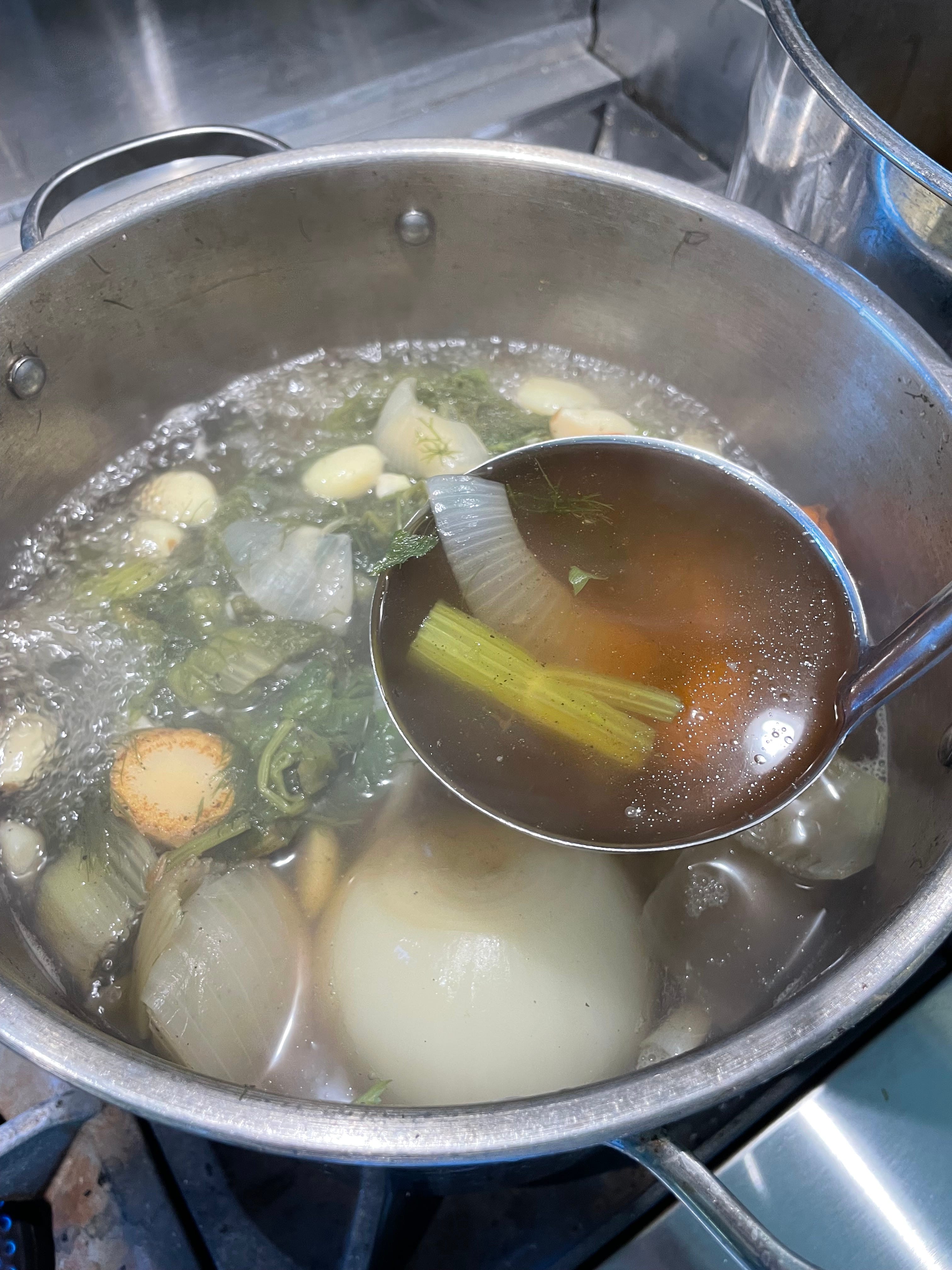
It’s not a new concept. People have been doing this for years. I’ve been doing it for years, but this winter, I feel as though I’ve made the most stocks I’ve ever made in my life. It’s constant. Nearly one giant pot a week. Two or three, if you count the ones I’m making at work too. This winter seems extra blustery and grey here in Alabama. It feels longer than normal with more extended bouts of cold, which I’m hoping means spring comes much sooner, like in February. And with this cold, I’ve been consuming soups and curries nearly every single day, sometimes twice a day, since December rolled around.
While I normally make a brothy pot in advance, freezing them in yogurt containers and those heavy duty to-go cups from my favorite Thai place down the street, I’ve very much been enjoying starting a pot and letting it boil and simmer in the mornings or afternoons so it’s hot and ready when it’s time to cook dinner…whatever it may be.
Scrap stock. Kitchen stock. Call it what you will.
The process is simple. You collect your most beloved kitchen scraps—carrot bits, celery tips and leaves, fennel stalks and fronds, onion slivers (and onion skins, but we’ll talk more about that later), those little garlic tips, leek greens—toss them in a giant pot of water, boil and simmer and that’s it. This is also a great way to use up those soft veggies you found at the back of your veggie drawer.
If you handle it just right, you’ll only use scraps and bones, remnants from previous kitchen prep, to make all your stocks from this point forward. All you need are freezer bags of some sort, kitchen scraps, bones and such, and a few flavorful additions to enhance the flavor. Things such as cardamom pods, bay leaves, herbs and medicinal flowers.
Collecting your kitchen scraps
If you prep food as much as I do, you’ll have a pretty hearty collection of things in no time. And if you don’t, that’s OK. The beauty is that it all gets frozen so you can use it when you need it. During your next prep, just stuff your kitchen scraps into a freezer-friendly bag or storage container (or several!) A few ideas to get the process started…
Try reusing freezer bags or store bought bread bags for collecting your scraps. It’s safe and eco-friendly. I just keep extra bags in the freezer so they’re handy when it’s time to gather my scraps. Once I use a bag, I’ll just pop it right back in the freezer, empty, for future use.
You can make several bags for various broths. If I used a ton of carrots in one day/week, I’ll split them into several bags. That way, I’m making a somewhat perfectly curated broth each time.
Keep your veggie scraps separate from your bones and meat scraps. That’s strictly for bag contamination purposes so I can ensure I’m able to reuse those veggie scrap bags again and again and again!
Let’s talk about onions! Onion skins (and garlic skins too!) can also be included in your stock. Just make sure they’re washed. The most important thing to note about onion skins though is color. Onion skins will turn your broth into a very beautiful light brown, so if you need a clear broth, don’t use onion skins. Again, this is when separating or curating bags for stock comes in handy.
What to add to your stock bags
The possibilities are endless, really. And while some folks are very particular about what they add to their bags, I’m of the mindset that, if we’re trying to be sustainable in the kitchen, then let’s use as many scraps as possible. Of course there are certain veggies that don’t necessarily work in a classic broth, so let’s craft a list of good and not-so-great options below.
Just a quick reminder to curate your bags as you see fit. Love making tomato soup? Then make yourself a tomato heavy scrap bag. Chicken noodle or chicken and rice dishes do well with a clear broth, so craft a bag that doesn’t include things like mushroom stems or onion skins. Just remember to label your bags accordingly.
You’ll want to collect about 4-6 cups of scraps and things for each stock bag!
Good additions include
Mushroom stems and bits: These will give nice rich, earthy umami (savory) flavor to your broth while adding just a bit of color
Onion skins and tips: Just remember that onion skins will turn the color of your broth a rich, nutmeg brown, so leave these out if you’re looking for a clear broth.
Carrot & celery tips and tops: This is a great way to use those carrot tops if you’re not in the mood for making carrot top pesto. Same for those celery leaves and those jagged celery bottoms some folks don’t like cooking with.
Carrot peels: definitely a great addition, although I don’t like using carrot skins unless they’re organic.
Leek greens: you know that tough, hearty and oh-so flavorful green bit of the leek? Toss that into your broth! Just make sure all dirt is removed. If you’ve ever cooked with a leek, you know just how dirty those layers can get. The best thing to do is soak the greens in cold water to remove debris before storing.
Fennel fronds, stems, outer skins and bottoms: literally any part of the fennel you aren’t using can be used in your stock.
Corn cobs: Yes! Corn cobs. Toss them in your stock bag!
Tomato bits and skins: Add a few into your stock bag or try making a tomato broth, which will use tomato skins and bits along with garlic and onion.
Asparagus tips Those hard, inedible bits finally have a purpose!
Extra herbs, sad herbs and herb stems Not one for incorporating the stems of your herbs into a dish? Add them to your freezer bag for future use. Also a good place to use those herbs that have been sitting in your vegetable drawer and immediately got sad because the thing no one tells you is that you shouldn’t store herbs in your vegetable drawer…
Kale and chard stems Some say don’t, I say do, but in limited amounts because sometimes those stems can make your broth a little bitter. But if that does happen, you can always add some lemons to neutralize that taste. Speaking of which…
Squeezed lemons Have a bunch of lemons (or any other citrus for that matter) that you’ve zested and squeezed? Add them to your stock bag. I love lemon in my stock, and honestly I always, always, always add a little acid to whatever dish I’m crafting because it brightens everything up. We’re just going light here though, unless you’re wanting a citrus heavy stock. Citrus is another thing that’s best organic, fyi.
Meat bones, scraps & innards If you eat meat, you should definitely collect your bones and meat scraps in a bag too. Keep it separate from your veggies and add what you need when it’s time to craft a warm pot. I also like using those innards from my whole fresh chickens in my broth. Lots of good nutrients in that! Just make sure you’re using good bones, ones that haven’t already had a good long boil so there’s still some nutrients and flavor left in them.
And not so great additions
Avoid super starchy things like potatoes which can cloud your stock
Peppers are ok to add to your broth if you have no plans of canning them, so only add them in if you’re freezing your stock.
Eggplants don’t really work as they can make your stock slimy
While you can absolutely use red beets in a broth, you might not want to unless you’re seeking a fuchsia colored stock. There are other alternatives for your better remnants like coloring your pickled onions or pickled turnips! And if you decide to use golden beets, which gives a good earthy flavor, it can make your stock bitter, so beware!
While we do love a no waste kitchen, you should absolutely never, ever use rotten or moldy veggies in you stock. Sad, limp veggies are fine. Just nothing too weird.
Some delicious add-ins (that aren’t required, but will definitely enhance both flavor AND nutrition
These things should be added in at the time of stock making and not necessarily added to your freezer scraps…
Cardamom pods
Bay leaves
Fresh herbs like oregano, parsley, sage and thyme
Black peppercorns
A whole clove of garlic or two! And then make sure you squeeze all that soft garlic into whatever dish you’re creating.
Fresh onion
Coriander seeds
A spicy pepper, two or several if you’re making a spicy dish
Fresh ginger or turmeric
Fresh lemongrass
Allspice berries (a little goes a long way)
Salt
Medicinal flowers like calendula, which gives it a gorgeous golden hue
Dried mushrooms
And now what?
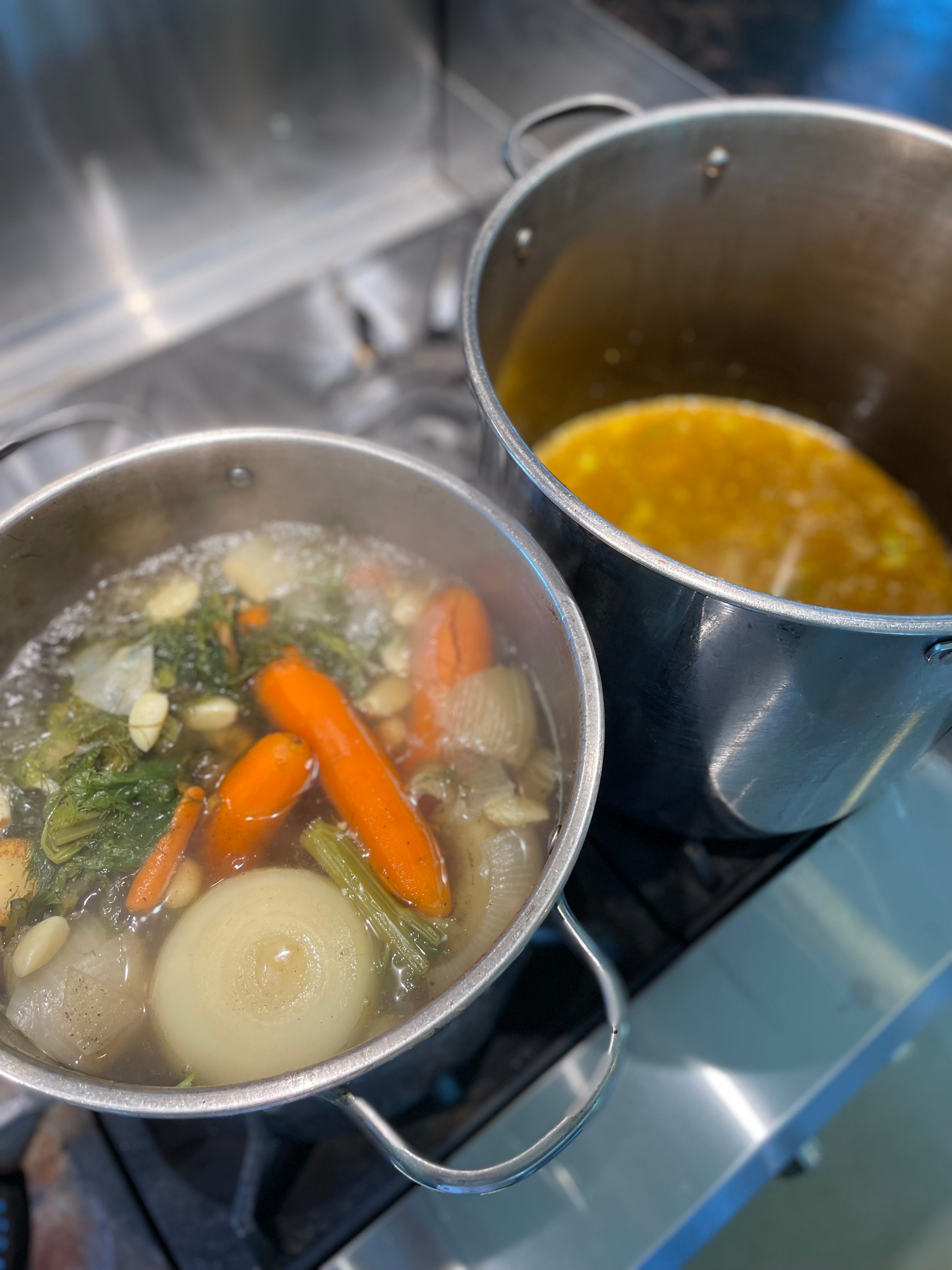
So you’ve collected bags of frozen scraps. Now comes the fun part which is making the stock, which you’ll make as you’d make any other stock or broth. Just grab yourself a good sized pot, some filtered water and get to cooking.
Here are some very simple instructions » Drop your ingredients in the pot, pour in your water and cook over high heat until it comes to a boil. Reduce the heat and simmer for at least two hours for maximum flavor. That’s it!
Use what you need in the moment and freeze or can the rest. While I used to make my stock in advance, I’ve gotten in the habit of just starting it as soon as I get home from work so I have hot stock to add to whatever dish I’m cooking—soups, risotto, rice, sauces. It’s nice just having a big old steaming pot of stock that you can ladle directly in to whatever you’re making, storing any leftover for future use. The pot can sit and simmer while you’re milling about cleaning or reading or writing or dare I say walking your dog? Don’t come for me. It’s been fine so far.
And that’s it! A super simple, eco-friendly, wholesome way to do something good for your belly, your kitchen and your planet. Go us!